The primal chill. Monsters, ghosts, and the uncanny – the stories that taught us how to fear the dark.
-
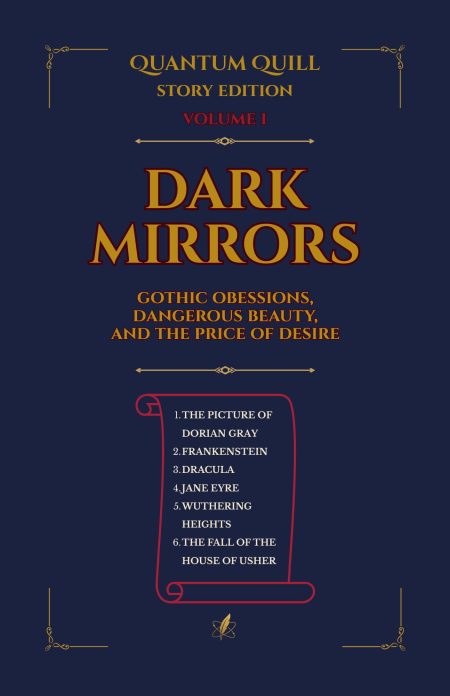
Dark Mirrors
0$16.99Beauty becomes corruption. Love becomes obsession. Desire becomes ruin.
Enter the dark heart of Gothic literature in Dark Mirrors: Gothic Obsessions, Dangerous Beauty, and the Price of Desire—a haunting collection of immersive modern retellings from the acclaimed Quantum Quill Story Editions series. Featuring cinematic reinterpretations of The Picture of Dorian Gray, Frankenstein, Dracula, Jane Eyre, Wuthering Heights, and The Fall of the House of Usher, this volume explores the dangerous tension between beauty and decay, ambition and conscience, passion and destruction.
These are not abridgments, summaries, or simplified adaptations. Quantum Quill Story Editions are fully original literary reinterpretations crafted for modern readers and listeners—preserving the essential characters, emotional arcs, themes, atmosphere, and philosophical depth of the original classics while presenting them in refined, cinematic prose with modern pacing, immersive clarity, and heightened accessibility. Each edition is carefully designed to deliver the emotional power of the classics in a format that feels immediate, vivid, and deeply engaging for contemporary audiences.
Inside Dark Mirrors, readers will encounter:
• A seductive descent into vanity and moral corruption in The Picture of Dorian Gray
• The catastrophic consequences of ambition without compassion in Frankenstein
• The hypnotic terror of immortality, seduction, and predation in Dracula
• A powerful struggle between love, secrecy, identity, and emotional imprisonment in Jane Eyre
• A storm-dark tale of obsession and vengeance in Wuthering Heights
• A psychological collapse into dread and madness in The Fall of the House of Usher
Crafted for readers who love Gothic fiction, dark academia, psychological horror, literary suspense, atmospheric classics, and emotionally immersive storytelling, Dark Mirrors bridges the timeless power of nineteenth-century literature with the readability and cinematic momentum modern audiences crave.
These stories do not merely ask whether monsters exist.
They ask whether we created them. -
Dark Mirrors audiobook
0$12.99Beauty becomes corruption. Love becomes obsession. Desire becomes ruin.
Enter the dark heart of Gothic literature in Dark Mirrors: Gothic Obsessions, Dangerous Beauty, and the Price of Desire—a haunting collection of immersive modern retellings from the acclaimed Quantum Quill Story Editions series. Featuring cinematic reinterpretations of The Picture of Dorian Gray, Frankenstein, Dracula, Jane Eyre, Wuthering Heights, and The Fall of the House of Usher, this volume explores the dangerous tension between beauty and decay, ambition and conscience, passion and destruction.
These are not abridgments, summaries, or simplified adaptations. Quantum Quill Story Editions are fully original literary reinterpretations crafted for modern readers and listeners—preserving the essential characters, emotional arcs, themes, atmosphere, and philosophical depth of the original classics while presenting them in refined, cinematic prose with modern pacing, immersive clarity, and heightened accessibility. Each edition is carefully designed to deliver the emotional power of the classics in a format that feels immediate, vivid, and deeply engaging for contemporary audiences.
Inside Dark Mirrors, readers will encounter:
• A seductive descent into vanity and moral corruption in The Picture of Dorian Gray
• The catastrophic consequences of ambition without compassion in Frankenstein
• The hypnotic terror of immortality, seduction, and predation in Dracula
• A powerful struggle between love, secrecy, identity, and emotional imprisonment in Jane Eyre
• A storm-dark tale of obsession and vengeance in Wuthering Heights
• A psychological collapse into dread and madness in The Fall of the House of Usher
Crafted for readers who love Gothic fiction, dark academia, psychological horror, literary suspense, atmospheric classics, and emotionally immersive storytelling, Dark Mirrors bridges the timeless power of nineteenth-century literature with the readability and cinematic momentum modern audiences crave.
These stories do not merely ask whether monsters exist.
They ask whether we created them. -
-
Dracula
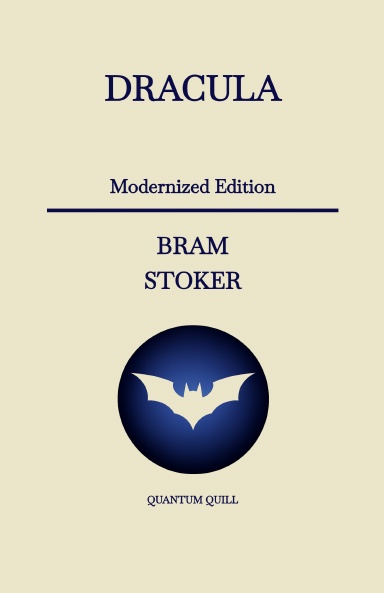
0$19.99This edition of Dracula presents Bram Stoker’s 1897 novel in a carefully modernized form designed for contemporary readers, while preserving the work’s original structure, narrative strategy, and psychological depth. Retaining the full epistolary format—journals, letters, newspaper clippings, and records—this Quantum Quill edition allows the story to unfold as a cumulative investigation rather than a conventional linear tale.
Language has been refined for clarity and momentum: archaic phrasing, obsolete idioms, and excessive ornamentation have been removed or streamlined, while tone, period setting, and character voice remain intact. No plot elements have been added or removed, and no themes have been reinterpreted. The result is a reading experience that restores tension, coherence, and emotional immediacy without sacrificing historical authenticity.
Supplementary editorial material guides readers in approaching the novel as a system of information—one in which truth emerges through pattern recognition, collaboration, and delayed understanding. Essays on how to read Dracula today, its historical context, and its enduring relevance frame the text without imposing interpretation.
This edition positions Dracula not merely as a gothic horror novel, but as a timeless examination of unseen power, rational denial, and the necessity of collective action—rendered accessible for modern audiences without diluting its original force. -
Frankenstein
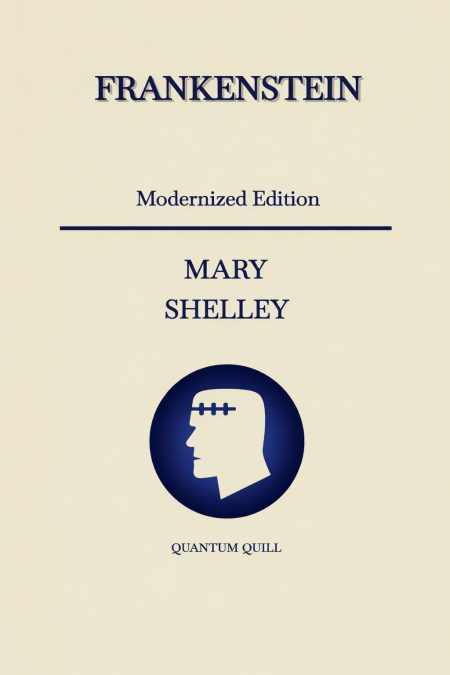
0$19.99The Quantum Quill Classic Series edition of Frankenstein presents Mary Shelley’s groundbreaking tale of creation, ambition, and consequence in a refined, modernized format. Updated for clarity while preserving the novel’s gothic atmosphere and philosophical depth, this edition offers an elegant reading experience with clean typography and essential contextual notes. A visionary work of imagination and morality—beautifully crafted for today’s reader.
The Quantum Quill Classic Series edition of Frankenstein presents Mary Shelley’s groundbreaking tale of creation, ambition, and consequence in a refined, modernized format. Updated for clarity while preserving the novel’s gothic atmosphere and philosophical depth, this edition offers an elegant reading experience with clean typography and essential contextual notes. A visionary work of imagination and morality—beautifully crafted for today’s reader. -
Hudson Valley Legends
0$19.99Where American folklore first found its enduring voice.
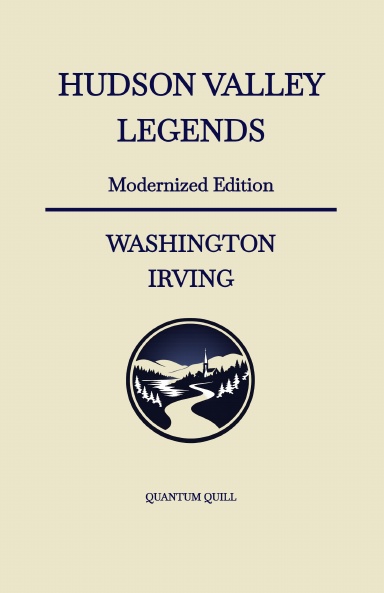
In Hudson Valley Legends, Washington Irving’s two most celebrated tales—Rip Van Winkle and The Legend of Sleepy Hollow—appear together in a carefully curated Quantum Quill Publishing edition that highlights their historical depth, literary craft, and cultural legacy. Set along the storied Hudson River, these works blend humor, superstition, and social observation to create some of the earliest and most influential myths of the American imagination.
Irving’s portrait of a villager who sleeps through a revolution and his tale of a schoolmaster pursued by a spectral rider capture a young nation’s anxieties, aspirations, and lingering ties to European folklore. Drawing on Dutch colonial traditions, Revolutionary memory, and the dramatic landscape of the Catskills, these stories helped establish the Hudson Valley as one of the first mythic regions in American literature.
This Quantum Quill Classic Series edition includes thoughtful contextual material that situates the tales within their historical and cultural setting, offering readers both narrative pleasure and a deeper appreciation of Irving’s role in shaping early American storytelling. Perfect for collectors, students, and general readers alike, this volume invites a return to the quiet villages, shadowed roads, and enduring legends that helped define America’s literary beginnings. -
Hudson Valley Legends Audiobook
0$9.99Where American folklore first found its enduring voice.
In Hudson Valley Legends, Washington Irving’s two most celebrated tales—Rip Van Winkle and The Legend of Sleepy Hollow—appear together in a carefully curated Quantum Quill Publishing edition that highlights their historical depth, literary craft, and cultural legacy. Set along the storied Hudson River, these works blend humor, superstition, and social observation to create some of the earliest and most influential myths of the American imagination.
Irving’s portrait of a villager who sleeps through a revolution and his tale of a schoolmaster pursued by a spectral rider capture a young nation’s anxieties, aspirations, and lingering ties to European folklore. Drawing on Dutch colonial traditions, Revolutionary memory, and the dramatic landscape of the Catskills, these stories helped establish the Hudson Valley as one of the first mythic regions in American literature.
This Quantum Quill Classic Series edition includes thoughtful contextual material that situates the tales within their historical and cultural setting, offering readers both narrative pleasure and a deeper appreciation of Irving’s role in shaping early American storytelling. Perfect for collectors, students, and general readers alike, this volume invites a return to the quiet villages, shadowed roads, and enduring legends that helped define America’s literary beginnings. -
Poe: Tales of Terror
0$19.99Enter fear where the mind becomes the monster.
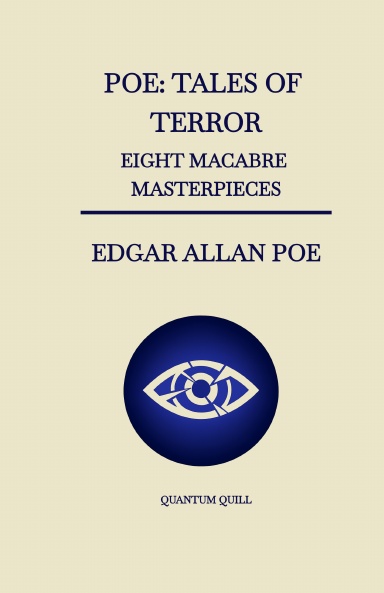
In Poe: Tales of Terror, Edgar Allan Poe leads you into eight meticulously crafted descents into obsession, guilt, confinement, and inevitable decay. This Quantum Quill edition reveals terror not as spectacle—but as a slow, suffocating force that rises from within.
Across these stories, a heartbeat betrays a murderer, a sealed vault becomes a living tomb, and a mind unravels beneath the weight of its own secrets. Each tale explores a distinct dimension of fear—from psychological collapse to atmospheric dread—forming a cohesive journey through the architecture of horror itself. As the collection unfolds, the boundaries between sanity and madness, reality and illusion, dissolve.
Enhanced with the proprietary Poe Fear Profile™ and curated editorial insights, this edition invites readers to experience Poe on a deeper level—not just as stories, but as immersive psychological landscapes. The structure of the collection itself traces an arc of terror, guiding you from inner disturbance to existential inevitability.
This is not horror of the external world.
It is horror of the human mind.
Read slowly. Listen closely.
The fear is already within you. -
Poe: Tales of Terror audiobook
0$19.99Enter fear where the mind becomes the monster.
In Poe: Tales of Terror, Edgar Allan Poe leads you into eight meticulously crafted descents into obsession, guilt, confinement, and inevitable decay. This Quantum Quill edition reveals terror not as spectacle—but as a slow, suffocating force that rises from within.
Across these stories, a heartbeat betrays a murderer, a sealed vault becomes a living tomb, and a mind unravels beneath the weight of its own secrets. Each tale explores a distinct dimension of fear—from psychological collapse to atmospheric dread—forming a cohesive journey through the architecture of horror itself. As the collection unfolds, the boundaries between sanity and madness, reality and illusion, dissolve.
Enhanced with the proprietary Poe Fear Profile™ and curated editorial insights, this edition invites readers to experience Poe on a deeper level—not just as stories, but as immersive psychological landscapes. The structure of the collection itself traces an arc of terror, guiding you from inner disturbance to existential inevitability.
This is not horror of the external world.
It is horror of the human mind.
Read slowly. Listen closely.
The fear is already within you. -
Rip Van Winkle
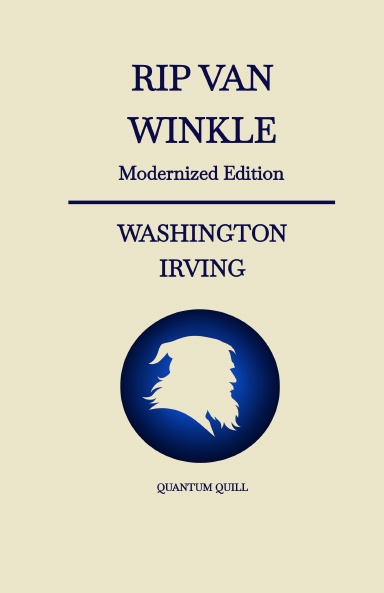
0$12.99A timeless American legend awakens to a transformed nation. Washington Irving’s Rip Van Winkle remains one of the foundational works of American literature—a story that blends folklore, humor, and historical reflection into a quietly profound tale of change, identity, and memory. Set in the Hudson Valley beneath the shadow of the Catskill Mountains, the story follows the gentle but idle Rip, whose mysterious twenty-year sleep carries him across the divide between colonial America and the birth of the United States.
This Quantum Quill Classic Series edition presents Irving’s text with careful restoration, reader-friendly typography, and thoughtful contextual materials designed to enhance understanding without interrupting immersion. Included are a cultural glossary, historical timeline, and interpretive essays that illuminate the world behind the story while preserving its narrative charm.
More than a whimsical fantasy, Rip Van Winkle captures the disorientation of living through history, the tension between tradition and progress, and the enduring human need for storytelling. Irving’s graceful prose and warm irony continue to resonate with modern readers navigating their own era of rapid transformation.
Ideal for students, collectors, and general readers alike, this edition offers a refined and accessible presentation of a landmark American tale—inviting each generation to rediscover the quiet wonder of waking to a changed world. -
Rip Van Winkle audiobook
0$9.99A timeless American legend awakens to a transformed nation. Washington Irving’s Rip Van Winkle remains one of the foundational works of American literature—a story that blends folklore, humor, and historical reflection into a quietly profound tale of change, identity, and memory. Set in the Hudson Valley beneath the shadow of the Catskill Mountains, the story follows the gentle but idle Rip, whose mysterious twenty-year sleep carries him across the divide between colonial America and the birth of the United States.
This Quantum Quill Classic Series edition presents Irving’s text with careful restoration, reader-friendly typography, and thoughtful contextual materials designed to enhance understanding without interrupting immersion. Included are a cultural glossary, historical timeline, and interpretive essays that illuminate the world behind the story while preserving its narrative charm.
More than a whimsical fantasy, Rip Van Winkle captures the disorientation of living through history, the tension between tradition and progress, and the enduring human need for storytelling. Irving’s graceful prose and warm irony continue to resonate with modern readers navigating their own era of rapid transformation.
Ideal for students, collectors, and general readers alike, this edition offers a refined and accessible presentation of a landmark American tale—inviting each generation to rediscover the quiet wonder of waking to a changed world. -